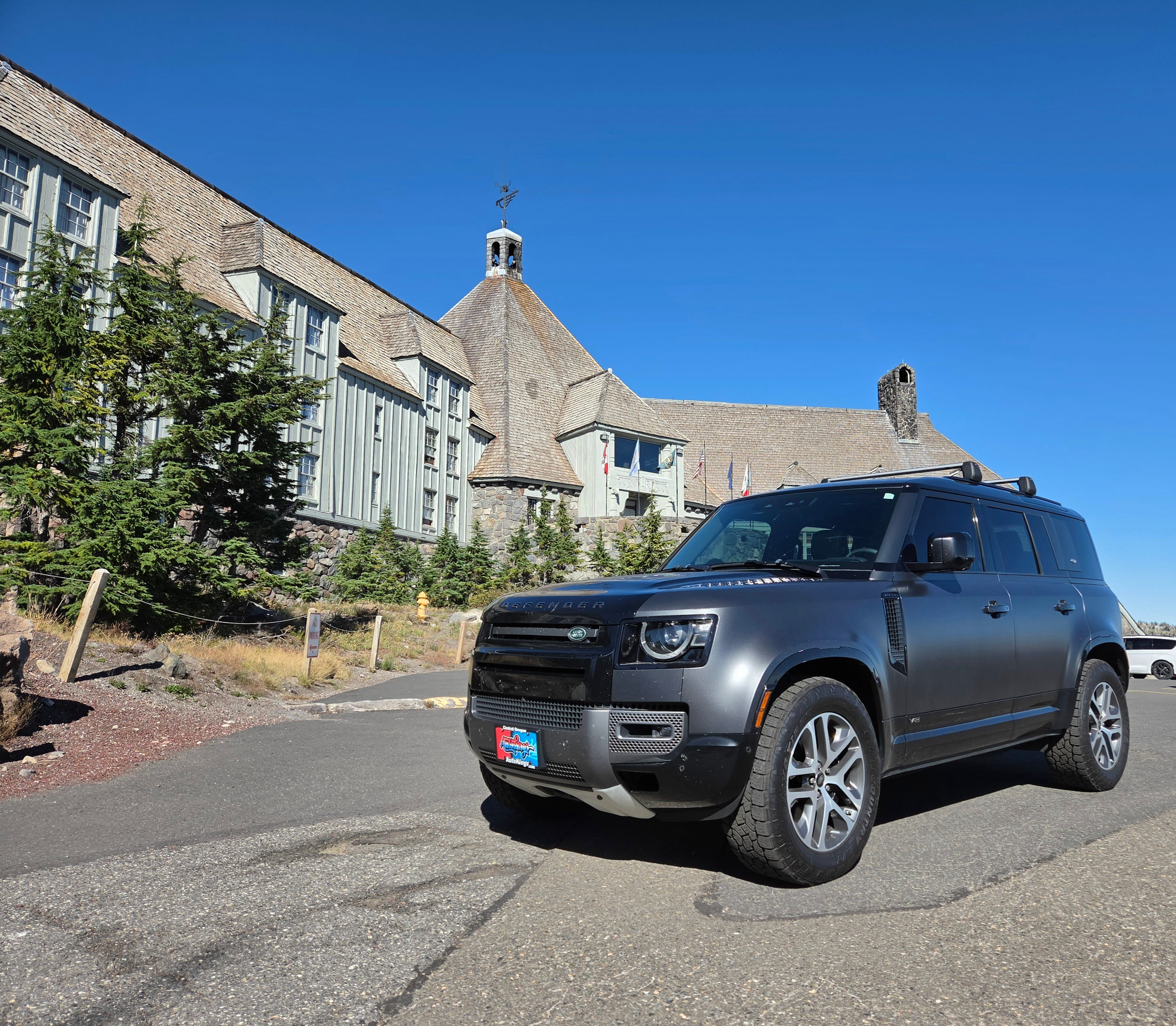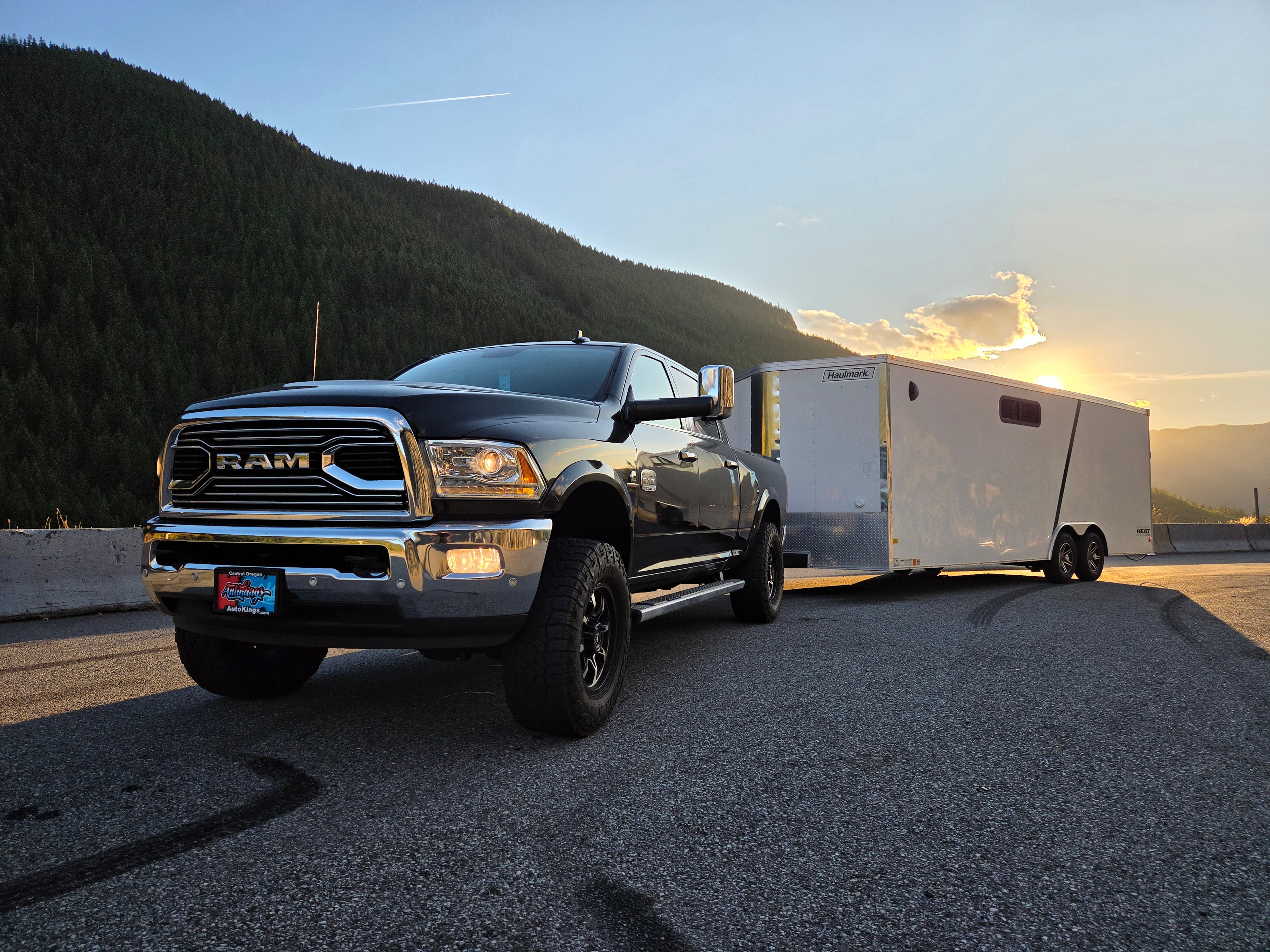

Living in Central Oregon means some of the most dramatic driving terrain in the country sits right outside our doors. You do not need to cross five state lines to find world-class asphalt; McKenzie Pass Highway (OR-242) is right in our backyard. Beginning just west of Sisters, Highway 242 climbs out of fragrant ponderosa pine stands, snakes through relentless hairpin switchbacks, and breaks above the tree line into a 65-square-mile sea of jagged volcanic basalt.
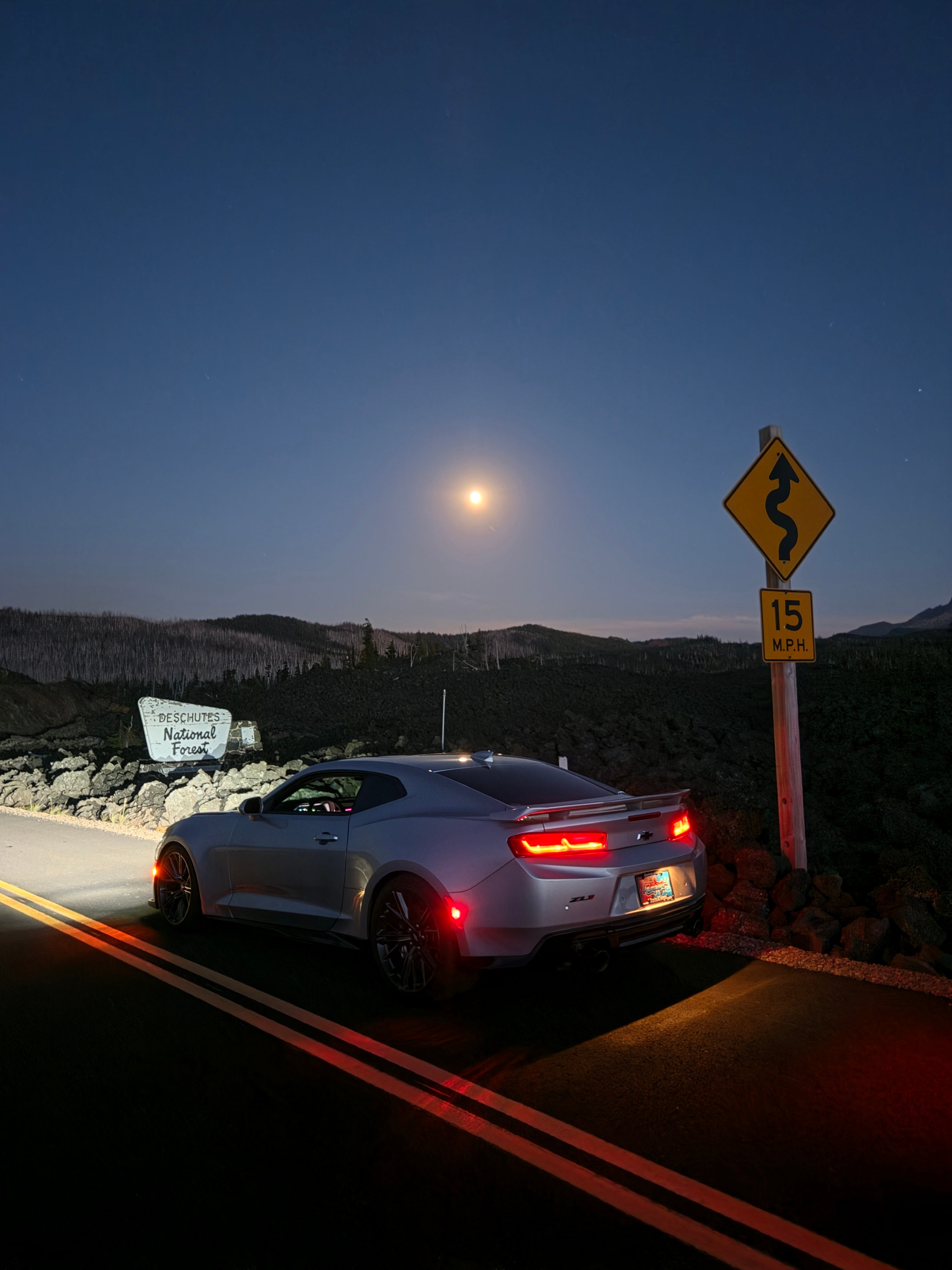
We took our silver 2017 Chevrolet Camaro ZL1 up to the summit at dusk to run the pass under the moonlight. The route proved why this stretch of pavement remains an essential bucket-list drive for true driving enthusiasts.
The Pedigree of the 2017 Camaro ZL1: A Track Weapon on Mountain Asphalt
When Chevrolet introduced the sixth-generation Camaro ZL1 in 2017, the model evolved beyond straight-line muscle into a legitimate world-class sports car. Developed on GM’s lightweight Alpha platform, the sixth-gen ZL1 was engineered specifically to set blistering lap times on the world's most demanding circuits, including a documented 7:16.04 lap at Germany’s notorious Nürburgring Nordschleife.
Under the carbon-fiber heat extractor on the hood sits a supercharged 6.2L LT4 small-block V8, factory rated at 650 horsepower and 650 lb-ft of torque.
Instant Forced Induction: The 1.7-liter Eaton supercharger delivers immediate low-end torque without turbo lag, pulling hard out of slow second-gear corners and climbing steep alpine grades effortlessly.
Magnetic Ride Control: Magnetorheological dampers read the pavement every millisecond, adjusting shock stiffness instantly to keep the tires planted over uneven mountain frost heaves and camber changes.
Precision Braking & Aero: Massive 6-piston front Brembo calipers gripping 15.35-inch two-piece rotors provide fade-free deceleration going into tight turns, while functional aero components—including the aggressive front splitter, "flowtie" grille emblem, and rear spoiler—maintain high-speed downforce and powertrain cooling.
On a road like OR-242, the ZL1 feels balanced, planted, and precise rather than unwieldy.
OR-242: A Short-Lived Season on an Unforgiving Mountain
Unlike standard mountain highways, Highway 242 is untouched by modern winter maintenance. The road is unplowed, unsalted, and unpainted for long stretches, preserving its raw character.
The Snow Window: Winter snowpacks reaching up to 14 feet shut the highway down behind snow gates from roughly November through late June or early July. This leaves only a narrow late-summer window for automotive enthusiasts to experience the route.
Historic Evolution: Long before asphalt was laid, this corridor was an ancient trade route used by Indigenous peoples. In 1862, pioneer Felix Scott Jr. cleared a rough trail across the basalt to move supply wagons and cattle to the Idaho mines. By 1872, the route operated as a privately held wagon toll road before being incorporated into the state highway system in the 1920s. In 1962, when commercial traffic shifted permanently to modern Highway 126, OR-242 was preserved as a dedicated Scenic Byway.
The Dee Wright Observatory: An Otherworldly High Desert Stronghold
At the 5,325-foot summit sits the Dee Wright Observatory, a striking stone stronghold that looks like an ancient fortress rising from the lava rock.
Built by the CCC (1935): Constructed during the Great Depression by the Civilian Conservation Corps (Company 1927), the structure was built entirely from surrounding native basalt. It was named in honor of Dee Wright, the project’s veteran Forest Service foreman who passed away in 1934 before construction finished.
Framed Viewing Portals: Inside the shelter, builders cut precise viewing slits into the stone walls, each angled to frame a specific Cascade peak.
The 1937 Bronze Compass: Ascending the exterior stairs leads to an open rooftop observation deck anchored by a bronze azimuth/peakfinder disk. Cast in 1937 by students at Portland’s Benson Polytechnic School, the brass instrument pinpoints the bearings and elevations of the surrounding horizon—including North and Middle Sister, Mount Washington, Belknap Crater, and Mount Jefferson.
Moonscape History: The surrounding black volcanic field—formed by basalt flows from Little Belknap Crater and Yapoah Cone thousands of years ago—is so stark and barren that NASA used the site in 1964 to train Apollo astronauts for lunar surface missions.
Find the Right Machine for the Open Road
Highway 242 reminds drivers that the journey matters just as much as the destination. Central Oregon offers exceptional driving landscapes, but enjoying them to the fullest requires the right machine under your control. Whether you want a supercharged performance coupe to carve mountain apexes, a high-clearance 4x4 to explore remote forest roads, or an efficient daily driver, the Pacific Northwest was built to be explored.
Visit Auto Kings in Central Oregon to view our hand-picked inventory and find the platform for your next mountain run.