90-Day Limited Powertrain Warranty Included!

Blog

How Often Do You Need A Brake Inspection?

How Often Do You Need A Brake Inspection?

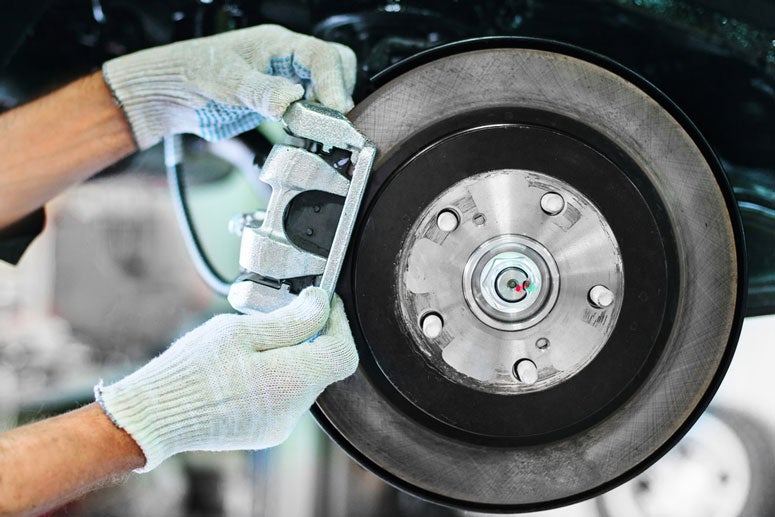
Regular brake inspection is important for ensuring the safety and performance of your vehicle. Many drivers often overlook the importance of getting their brakes checked regularly, leading to potentially dangerous situations on the road. While a routine brake inspection might seem unnecessary if your car is functioning well, it is vital to prevent unexpected brake failures.

Recommended Frequency for Routine Brake Inspections by Professionals

Professional brake inspections should be conducted at regular intervals to ensure optimal vehicle performance. Experts typically recommend having your brakes inspected every 10,000 to 15,000 miles or once a year, whichever comes first. This schedule allows for early detection of any wear and tear that might not be visible during regular driving. Regular inspections can also help identify potential issues that could worsen over time, saving you from costly repairs and enhancing overall vehicle safety.

Signs Indicating Immediate Need for Brake Inspection and Maintenance

Certain signs indicate an immediate need for brake inspection and maintenance. If you notice unusual noises like squealing or grinding when braking, it could mean that the brake pads are worn out and need replacement. A vibrating brake pedal or a feeling that the vehicle pulls to one side while braking is also a red flag. These symptoms may indicate more serious issues, such as warped rotors or a malfunctioning brake system, necessitating prompt professional attention to maintain safety and reliability.

Impact of Driving Habits on Brake Inspection Frequency

Driving habits significantly impact how often your brakes need inspection. Aggressive driving, such as frequent hard braking or high-speed driving, causes brake components to wear out more quickly. Similarly, driving in heavy traffic or hilly terrain puts additional strain on the braking system. For drivers with such habits, more frequent brake inspections are advisable. Regular checks can catch early wear and tear, allowing timely maintenance to prevent sudden brake failures and maintaining the vehicle operating safely under all conditions.

Importance of Regular Inspections for Vehicle Safety and Performance

Regular brake inspections are essential for maintaining vehicle safety and performance. They help ensure that all components of the braking system are functioning correctly, reducing the risk of accidents due to brake failure. Inspections can identify worn-out parts before they become a major problem, thus preventing more extensive damage to the braking system. This proactive approach not only safeguards the driver and passengers but also enhances the vehicle's overall performance, providing peace of mind during every journey.

Enhance Your Ride with Auto Kings Car Maintenance Services

Make sure your vehicle stays in top shape with Car Maintenance Services from Auto Kings. Our skilled technicians provide thorough brake inspections and routine maintenance to keep your vehicle running smoothly. With our expert Auto Repair Services, we address any mechanical issues promptly and professionally, ensuring your car remains reliable and safe on the road. At Auto Kings, we are committed to delivering exceptional service and satisfaction, making us your go-to destination for all your automotive needs.
Recommended Posts

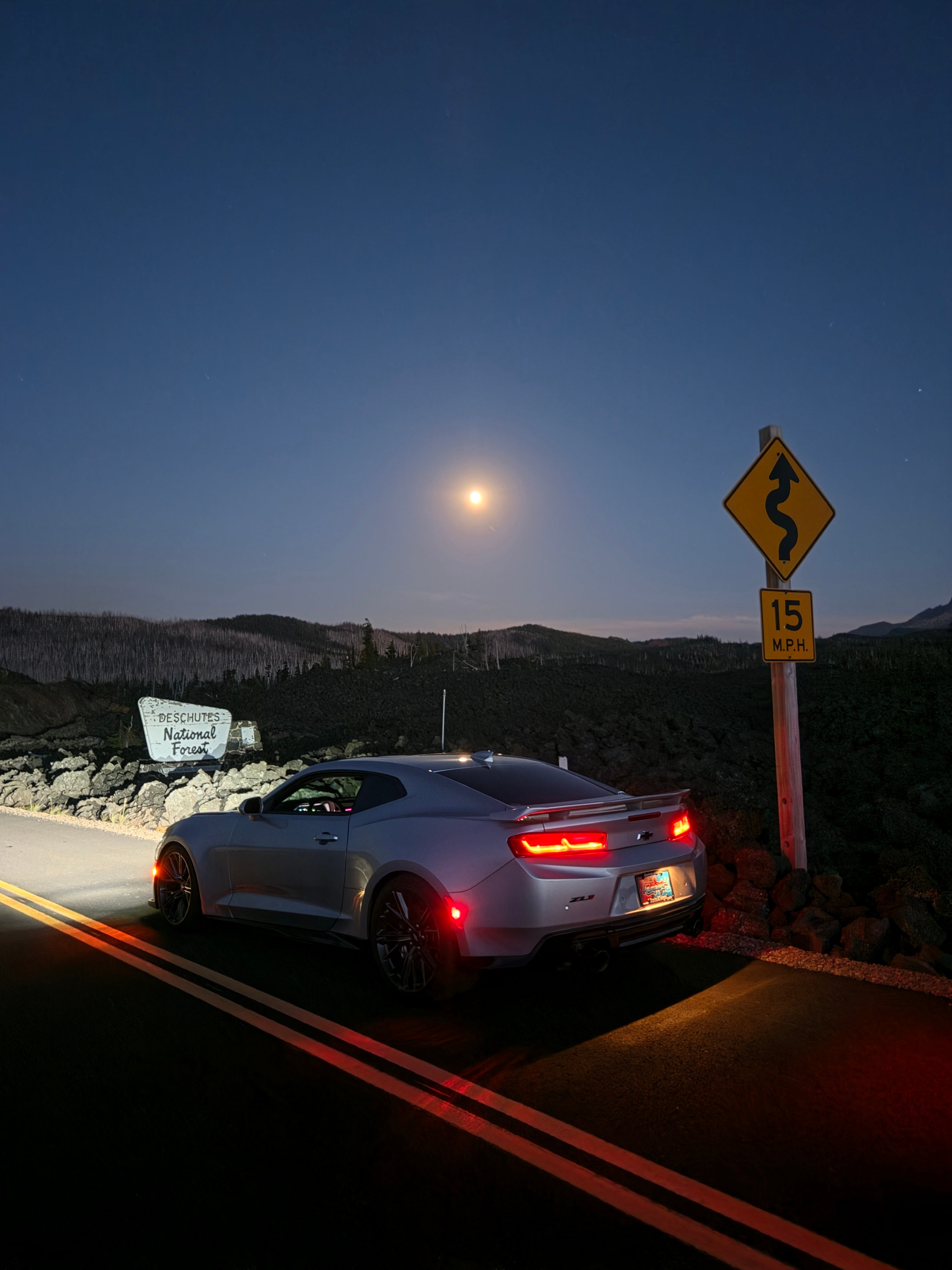
Camaro ZL1 Dee Wright Observatory

Taming the Lava Fields: Why McKenzie Pass (OR-242) Is Central Oregon’s Ultimate Driver’s Road

Taming the Lava Fields: Why McKenzie Pass (OR-242) Is Central Oregon’s Ultimate Driver’s Road Living in Central Oregon means some of the most dramatic driving terrain in the country sits right outside our doors. You do not need to cross five state lines to find world-class asphalt; McKenzie Pass Highway (OR-242) is right in our backyard. Beginning just west of Sisters, Highway 242 climbs out of fragrant ponderosa pine stands, snakes through relentless hairpin switchbacks, and breaks above the tree line into a 65-square-mile sea of jagged volcanic basalt. We took our silver 2017 Chevrolet Camaro ZL1 up to the summit at dusk to run the pass under the moonlight. The route proved why this stretch of pavement remains an essential bucket-list drive for true driving enthusiasts. The Pedigree of the 2017 Camaro ZL1: A Track Weapon on Mountain Asphalt When Chevrolet introduced the sixth-generation Camaro ZL1 in 2017, the model evolved beyond straight-line muscle into a legitimate world-class sports car. Developed on GM’s lightweight Alpha platform, the sixth-gen ZL1 was engineered specifically to set blistering lap times on the world's most demanding circuits, including a documented 7:16.04 lap at Germany’s notorious Nürburgring Nordschleife. Under the carbon-fiber heat extractor on the hood sits a supercharged 6.2L LT4 small-block V8, factory rated at 650 horsepower and 650 lb-ft of torque. Instant Forced Induction: The 1.7-liter Eaton supercharger delivers immediate low-end torque without turbo lag, pulling hard out of slow second-gear corners and climbing steep alpine grades effortlessly. Magnetic Ride Control: Magnetorheological dampers read the pavement every millisecond, adjusting shock stiffness instantly to keep the tires planted over uneven mountain frost heaves and camber changes. Precision Braking & Aero: Massive 6-piston front Brembo calipers gripping 15.35-inch two-piece rotors provide fade-free deceleration going into tight turns, while functional aero components—including the aggressive front splitter, "flowtie" grille emblem, and rear spoiler—maintain high-speed downforce and powertrain cooling. On a road like OR-242, the ZL1 feels balanced, planted, and precise rather than unwieldy. OR-242: A Short-Lived Season on an Unforgiving Mountain Unlike standard mountain highways, Highway 242 is untouched by modern winter maintenance. The road is unplowed, unsalted, and unpainted for long stretches, preserving its raw character. The Snow Window: Winter snowpacks reaching up to 14 feet shut the highway down behind snow gates from roughly November through late June or early July. This leaves only a narrow late-summer window for automotive enthusiasts to experience the route. Historic Evolution: Long before asphalt was laid, this corridor was an ancient trade route used by Indigenous peoples. In 1862, pioneer Felix Scott Jr. cleared a rough trail across the basalt to move supply wagons and cattle to the Idaho mines. By 1872, the route operated as a privately held wagon toll road before being incorporated into the state highway system in the 1920s. In 1962, when commercial traffic shifted permanently to modern Highway 126, OR-242 was preserved as a dedicated Scenic Byway. The Dee Wright Observatory: An Otherworldly High Desert Stronghold At the 5,325-foot summit sits the Dee Wright Observatory, a striking stone stronghold that looks like an ancient fortress rising from the lava rock. Built by the CCC (1935): Constructed during the Great Depression by the Civilian Conservation Corps (Company 1927), the structure was built entirely from surrounding native basalt. It was named in honor of Dee Wright, the project’s veteran Forest Service foreman who passed away in 1934 before construction finished. Framed Viewing Portals: Inside the shelter, builders cut precise viewing slits into the stone walls, each angled to frame a specific Cascade peak. The 1937 Bronze Compass: Ascending the exterior stairs leads to an open rooftop observation deck anchored by a bronze azimuth/peakfinder disk. Cast in 1937 by students at Portland’s Benson Polytechnic School, the brass instrument pinpoints the bearings and elevations of the surrounding horizon—including North and Middle Sister, Mount Washington, Belknap Crater, and Mount Jefferson. Moonscape History: The surrounding black volcanic field—formed by basalt flows from Little Belknap Crater and Yapoah Cone thousands of years ago—is so stark and barren that NASA used the site in 1964 to train Apollo astronauts for lunar surface missions. Find the Right Machine for the Open Road Highway 242 reminds drivers that the journey matters just as much as the destination. Central Oregon offers exceptional driving landscapes, but enjoying them to the fullest requires the right machine under your control. Whether you want a supercharged performance coupe to carve mountain apexes, a high-clearance 4x4 to explore remote forest roads, or an efficient daily driver, the Pacific Northwest was built to be explored. Visit Auto Kings in Central Oregon to view our hand-picked inventory and find the platform for your next mountain run.

Key West

From the High Desert to Mile Marker 0: Why the Minivan Is the Undisputed King of the Cross-Country Road Trip

When car enthusiasts envision the ultimate cross-country road trip machine, minds usually drift toward sleek convertibles, thunderous V8 grand tourers, or lifted overland rigs. But when you’re loading up the entire family to cross multiple state lines, tackle thousands of highway miles, and drive until the pavement literally runs out in the ocean, one vehicle class quietly takes the crown: the minivan. We were recently blessed to take on an iconic American pilgrimage—driving all the way down through the Florida Keys to stand beneath the legendary Mile Marker 0 sign in Key West. Our chariot for the long-haul journey? A Chrysler Pacifica. Standing at the official southern terminus of U.S. Route 1 after crossing dozens of bridges suspended over turquoise water, one thing became crystal clear: when it comes to keeping a family comfortable, organized, and sane across thousands of miles, nothing beats a purpose-built family hauler. Here is why the humble minivan remains the ultimate long-distance road-trip platform. 1. Dual Power Sliding Doors: A Road-Trip Superpower Ask any parent who has navigated a packed interstate rest stop or a tight parking stall in historic downtown Key West—traditional swinging doors simply cannot compete. Zero Parking Lot Stress: Power sliding doors eliminate door-ding anxiety completely. Your kids can hop in and out freely without clipping adjacent vehicles, no matter how tight the space. One-Touch Loading: When your hands are full of luggage, beach towels, and road trip snacks, a tap of the key fob or a wave of your foot opens wide entryways without wrestling handles. 2. Genuine Three-Row Comfort & Unmatched Cargo Packaging While large SUVs look rugged on the outside, their interior packaging often forces compromises. Minivans, on the other hand, are engineered around maximum interior volume and ease of use. Real Legroom in Every Row: Unlike the cramped third rows found in many midsize crossovers, minivans provide full-size seating where adults and teenagers can actually stretch out for hours. Deep Cargo Wells & Hidden Storage: Deep rear trunk wells and fold-flat floor systems (like Chrysler’s Stow 'n Go) mean coolers, suitcases, strollers, and souvenirs can be stowed low and out of sight, keeping your rear view clear and cabin uncluttered. 3. Effortless Highway Cruising & Fuel Efficiency Covering thousands of miles across state lines means highway efficiency directly impacts both your travel time and your fuel budget. Sleek Aerodynamics: Sitting lower to the ground than heavy body-on-frame SUVs, minivans glide through the air far more efficiently, returning impressive highway MPG. Fewer Fuel Interruptions: Efficient cruising translates to extended highway range, allowing you to bypass congested exits and keep momentum on open interstate stretches. 4. Built-in Road Trip Tech & Practical Comforts Keeping everyone calm, entertained, and recharged across thousands of miles is essential for a peaceful journey. Abundant Power & Connectivity: Dedicated USB and power ports in every row keep tablets, phones, and gaming devices charged around the clock. Thoughtful Cabin Design: From integrated sunshades to endless cupholders and smart storage cubbies, everything has a designated home—preventing the inevitable "road-trip chaos" from taking over your driving environment. The Destination Is Great, but the Journey Matters Most Standing beside the Mile Marker 0 sign in Key West—the start of a highway that runs 2,369 miles all the way to Fort Kent, Maine—serves as a great reminder of why we drive. A successful family road trip isn't about bragging rights or horsepower; it’s about the memories made looking out the windows, the easy laughter across the rows, and arriving safely with smiles on everyone’s faces. Whether you're gearing up for a cross-country family expedition, looking for a dependable daily commuter, or hunting for a weekend adventure rig, visit us at Auto Kings in Central Oregon. We’re here to help you find the right vehicle to get your family out making memories on the open road.

Bench Fire Royal Enfield

Respecting the Fire: The Royal Enfield Continental GT 650 “Mr. Clean” in Warm Springs 🏍️🌾

Fire season in Central Oregon carries a distinct weight. Out on the open plateau of the Warm Springs Reservation, as the smoke from the Bench Fire billowed across the horizon toward Mount Jefferson, the sky shifted into a heavy, amber haze. Seeing a herd of wild horses grazing calmly in the dry grass against that towering plume was a stark, humbling sight—a vivid reminder of the raw power of nature and the quiet resilience of our local Tribal communities and firefighters on the front lines. It’s a landscape that doesn't care about trends, algorithms, or digital clutter. It is raw, unforgiving, and deeply authentic. And out here, riding a motorcycle isn't about chasing lap times or staring at complex TFT screens. It’s about balance, awareness, and connection. It’s an analog machine built for an analog landscape. Pure Mechanical Connection: The GT 650 "Mr. Clean" That raw connection is exactly what makes the Royal Enfield Continental GT 650 in the hand-polished "Mr. Clean" chrome spec feel so uniquely suited to Central Oregon’s backroads. While modern superbikes become increasingly digitized with traction control modes, electronic ride-by-wire throttles, and computer assistance, the GT 650 strips the experience back to the absolute essence of motorcycling: The Tactile Engine: The 648cc air-and-oil-cooled parallel twin doesn't rely on screaming redlines to impress you. It delivers honest, linear low-end torque with a deep, rhythmic twin-cylinder pulse that you feel directly through the pegs and clip-on handlebars. The Mirror-Finish Chrome Tank: The "Mr. Clean" edition features a hand-polished chrome tank with classic pin-striping that reflects the high-desert elements around it—from the golden sagebrush to the amber hues of a smoke-filled sunset. Pure Analog Gauges: Twin needle-and-dial gauges keep your eyes on the road and the scenery ahead, feeding you only the information that matters without screen glare or distractions. A Precision Harris Performance Frame: Built around a double-cradle chassis designed by legendary frame builders Harris Performance, the bike tracks with grounded, predictable stability whether you're rolling over washboard dirt backroads or sweeping through asphalt curves. Respecting the Land and the Journey Riding through areas like Warm Springs during an active wildfire teaches you to pay attention. You feel the sudden drops in air temperature near the rivers, smell the dry pine needles, and watch the wind shifts carry smoke across the ridge lines. At Auto Kings, whether we’re showcasing mountain-ready 4x4s at our Bend lot or classic two-wheeled machines out in Redmond, our goal is to honor the region we live in. We choose inventory that encourages people to get out, respect the terrain, and truly experience the Pacific Northwest in its purest form. Our thoughts remain with the residents, landowners, and emergency personnel navigating the Bench Fire. Stay safe, respect local land restrictions and emergency notices, and take time to appreciate the wild beauty of the high desert.