
90-Day Limited Powertrain Warranty Included!

Blog

Brake Lights Stay On: Troubleshooting And Fixing The Issue

Brake Lights Stay On: Troubleshooting And Fixing The Issue

When your brake lights stay on, it can be a frustrating problem that not only drains your car's battery but also poses a potential safety risk to other drivers. This issue can leave you perplexed, especially if you're unsure of what steps to take to resolve it. Here’s a detailed guide to help you identify the causes and solutions, ensuring your vehicle remains in top-notch condition and free from any brake light malfunctions.

Identify Common Causes of Brake Lights Remaining On

Brake lights staying on can be caused by several issues, including a malfunctioning brake light switch, misalignment of components, or faulty wiring. Sometimes, the problem may arise from a simple oversight, such as a stuck brake pedal that fails to return to its proper position. Additionally, worn-out components like brake light bulbs or blown fuses can contribute to the issue. Identifying the common causes can help you determine the best course of action to fix the problem effectively.

Inspect the Brake Light Switch for Malfunction or Misalignment

The brake light switch is a crucial component responsible for activating your brake lights when you press the pedal. Over time, the switch can malfunction or become misaligned, causing the brake lights to stay on continuously. Carefully inspect the switch for any visible signs of wear, damage, or misalignment. If necessary, adjust the switch to make sure it is properly aligned with the brake pedal. A quick inspection and adjustment can often resolve this issue and restore your brake lights to proper functionality.

Examine Brake Pedal and Associated Components for Issues

A thorough examination of the brake pedal and its associated components is essential to determine if there is a problem causing the brake lights to remain on. Sometimes, debris or dirt can obstruct the pedal's movement, preventing it from returning to its normal position. In other cases, worn-out components like springs or bushings may need replacement. Securing that the brake pedal and its components are in good condition will help prevent any further issues with the brake lights.

Check for Faulty or Damaged Wiring and Electrical Connections

Faulty or damaged wiring and electrical connections can lead to persistent brake light issues. Over time, wires may become frayed or damaged due to wear and tear, leading to electrical malfunctions. Inspect the wiring connected to the brake light system for any visible damage or loose connections. Replacing damaged wires and securing any loose connections will help restore the proper functioning of the brake lights. A meticulous check of the wiring can resolve electrical issues that may be causing the lights to stay on.

Replace Brake Light Bulbs and Fuse if Necessary

In some cases, the brake lights may remain on due to burnt-out bulbs or blown fuses. Over time, bulbs can wear out, leading to erratic lighting behavior. Similarly, a blown fuse can disrupt the electrical circuit, causing the lights to stay on. Inspect the bulbs for any signs of damage or burnout and replace them if necessary. Also, check the fuse box and replace any blown fuses with new ones. Replacing faulty components will ensure your brake lights function correctly and improve your vehicle’s safety.

Discover Auto Kings' Car Maintenance Services and Auto Repair Services

When your brake lights stay on, don't let it hinder your driving experience or safety on the road. At Auto Kings, we provide comprehensive car maintenance services to ensure your vehicle remains in perfect condition. Our team of experts specializes in identifying and resolving brake light issues quickly and efficiently. We also offer top-notch auto repair services to address any other concerns your car may have. Visit us today to experience unparalleled care and attention for your car.
Recommended Posts

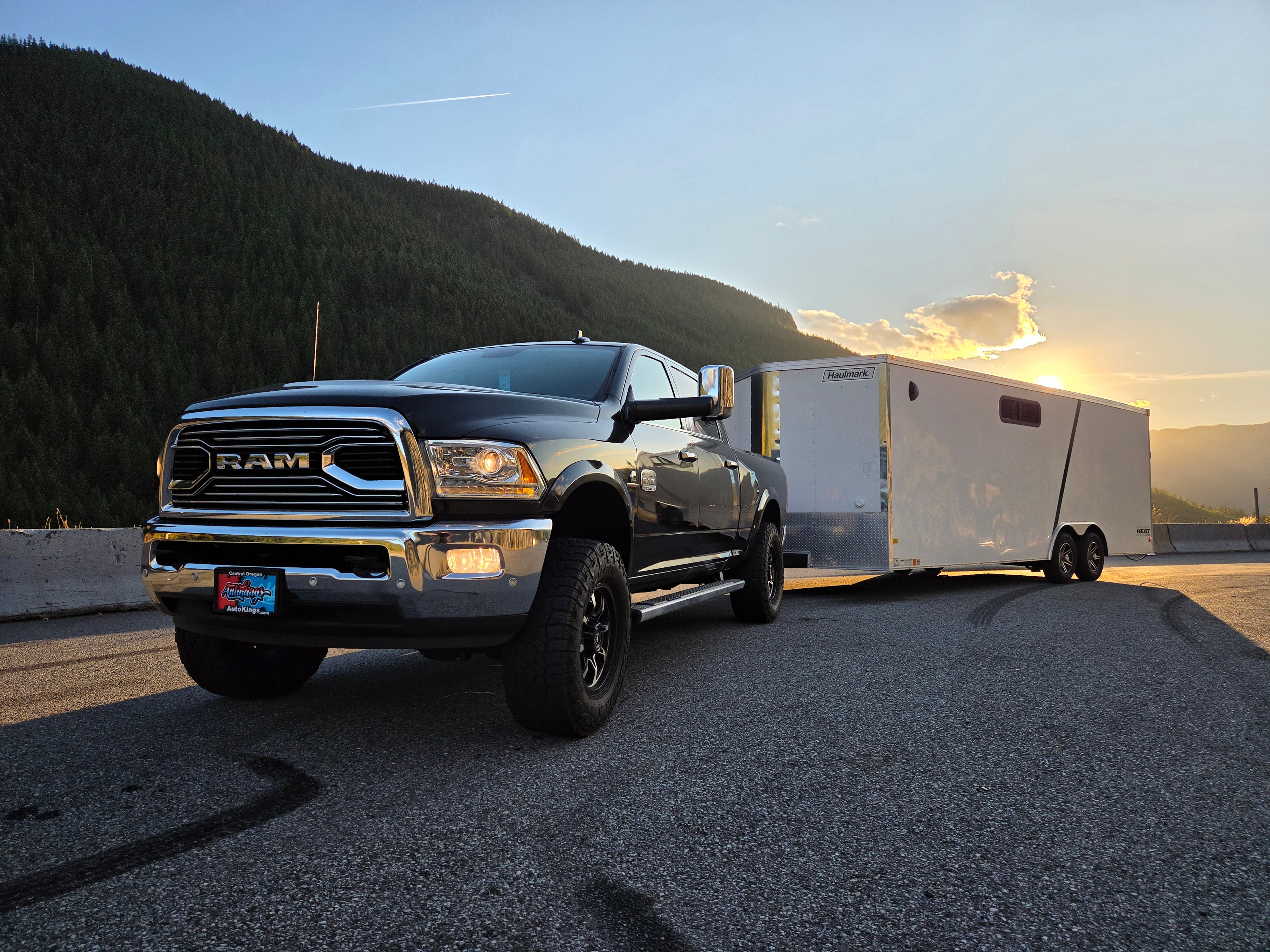
2018 Ram 2500 Longhorn

Towing the High Cascades: How a 2018 Ram 2500 Longhorn Tames Mountain Grades

Towing the High Cascades: How a 2018 Ram 2500 Longhorn Tames Mountain Grades Anyone who tows in the Pacific Northwest knows the sinking feeling of watching engine temps climb as a mountain grade steepens. You pull out from the valley floor, hit a relentless 6% grade on Santiam Pass or Government Camp with an enclosed box trailer catching a headwind, and your truck drops three gears, screaming at 4,500 RPM just to hold 50 MPH. We hooked a heavy tandem-axle Haulmark enclosed trailer to our black 2018 Ram 2500 Laramie Longhorn and pointed it west into the Cascades to see if fourth-generation Ram heavy-duty engineering still holds the crown for real-world Northwest hauling. Quick Hauler Specs: 2018 Ram 2500 Crew Cab 4x4 Powertrain: 6.7L Cummins High-Output Turbo Diesel Inline-6 Output: 370 Horsepower / 800 lb-ft of Torque Transmission: 68RFE 6-Speed Automatic with Tow/Haul Mode Max Tow Rating: Upwards of 17,000+ lbs (configuration dependent) Rear Suspension: Class-exclusive Five-Link Coil Rear Axle The Sweet Spot of the Fourth-Gen (DS/DJ) Platform Truck enthusiasts hold the late fourth-generation Rams in high regard for a reason. By 2018—the final chapter of this iconic body style—Ram had spent nearly a decade ironing out every quirk of the heavy-duty chassis. You get the rugged, proven steel-frame bones that built Ram’s modern reputation, paired with modern tech like the 8.4-inch Uconnect system, Apple CarPlay, and factory integrated trailer brake controls. It represents that rare sweet spot: fully modernized convenience without the hyper-complicated, sensor-overloaded feel of newer platforms. The Cummins Difference: 800 lb-ft of Pure Diesel Low-End The true test came halfway up the mountain pass as the highway narrowed to two lanes and the grade pitched up. Under the hood, the legendary 6.7-liter Cummins inline-six turbo diesel barely broke a sweat. Unlike high-revving V8s that need to hunt for redline to make power, the inline-six layout produces its wall of 800 lb-ft of torque right at 1,600 RPM. Leaning into the throttle to overtake a slow logging rig felt effortless; the boost spooled instantly, the 68RFE transmission held its gear, and the truck pulled the enclosed trailer uphill like it was running empty on a flat interstate. Coming back down the other side of the pass is where most heavy hauls get white-knuckle. This is where Ram’s Smart Diesel Exhaust Brake changes everything. Tap the dash button, lift off the accelerator, and the variable-geometry turbo backpressures the engine. It holds the heavy trailer back with a deep, commercial-grade exhaust growl, saving your service brake pads from glazing over and keeping the steering wheel calm into tight downhill curves. Taming the "Bucking Bronco": The Five-Link Coil Secret Traditionally, heavy-duty three-quarter-ton pickups punish your spine with stiff, multi-leaf rear springs. Ram broke the mold for this generation by swapping out leaf springs for a heavy-duty five-link rear coil suspension. On the road, the difference is immediate. When an empty enclosed trailer hits rhythmic concrete frost heaves on mountain bridges, standard leaf-spring trucks can hop and "buck." Ram’s coil-spring link design provides superior lateral axle control. It plants the rear tires, absorbs road chitter, and keeps the trailer tracking in a dead-straight line even when high-elevation wind gusts try to push you across the center stripe. Ranch Luxury Inside the Longhorn After hours behind the wheel wrestling mountain weather, stepping inside the Laramie Longhorn feels like walking into an exclusive high-desert lodge. Ram didn't use cheap synthetic vinyl here. The Longhorn is wrapped in thick, saddle-grade cattleman leather with laser-etched Western filigree, paired with real burnished wood trim and deep-pile floor mats with removable carpet inserts. With heated and ventilated bucket seats, you stay cool climbing through sunny canyon flats and warm when the evening mountain air drops near freezing. Ready to Hitch Up at Auto Kings A truck like this isn't bought to sit in a suburban garage—it's built to pull cattle trailers, haul race cars, move heavy cargo boxes, and cross Cascade passes without flinching. The exact 2018 Ram 2500 Laramie Longhorn featured in this run is thoroughly inspected, detailed, and available now on our showroom floor. If you are looking for a proven, turnkey heavy-duty diesel hauler built to work across Central Oregon and beyond, stop by Auto Kings in Bend or Redmond to see it in person and hook up for your next big run.

2014 Harley Ultra Limited

From High Desert Pines to Crashing Waves: Conquering the Oregon Coast on a 2014 Harley-Davidson Ultra Limited

Living in Central Oregon, we’re spoiled by towering ponderosa pines, jagged volcanic peaks, and endless bluebird skies. But every so often, the open road calls for something different: the crisp bite of salt spray, rolling Pacific fog, and the rhythmic thunder of surf breaking against rugged sea stacks. Few rides in North America rival the journey from the high desert over the Cascade Range and down to iconic U.S. Highway 101. We recently loaded up a vivid black 2014 Harley-Davidson Electra Glide Ultra Limited and pointed the front wheel west, tracking the Pacific coastline all the way to the windswept heights of Cape Perpetua. If you’ve ever wondered why grand American touring bikes exist, this ride answers the question within the first five miles. The Machine: 2014 Harley-Davidson Ultra Limited (Project RUSHMORE) Tackling a multi-hundred-mile cross-state haul through steep mountain passes, coastal dampness, and winding coastal two-lanes requires a motorcycle engineered for serious endurance. The 2014 model year marked the launch of Harley’s Project RUSHMORE —a major overhaul that refined grand touring comfort and road manners. Twin-Cooled High Output Twin Cam 103: Powering this 2014 Ultra Limited is the Twin-Cooled Twin Cam 103 V-Twin. With liquid-cooled cylinder heads tucked discreetly inside the lower fairings, it maintains peak power and rider comfort even in slow coastal traffic and climbing summer grades. Pumping out over 105 lb-ft of low-end torque, you can roll on the throttle in sixth gear and let that signature American rumble pull you up coastal headlands without endless downshifting. Splitstream Fairing Aerodynamics: The wind-tunnel-designed Batwing fairing features the center Splitstream vent, equalizing air pressure to virtually eliminate helmet buffeting across windy coastal headlands. Touring Comfort & Hidden Brembo Hardware: Between the plush seating, one-touch saddlebag latches, and spacious Tour-Pak trunk, long days in the saddle are effortless. When damp ocean pavement demands sudden stopping power, the factory Reflex Linked Brembo ABS brakes (stamped with the Bar & Shield script on the outside, but engineered by Brembo) distribute braking force evenly between wheels for rock-solid stability. Cape Perpetua: Centuries of Maritime and Coastal History Rising steep above the churning Pacific south of Yachats, the massive headland of Cape Perpetua carries deep layers of Pacific Northwest history dating back thousands of years. Ancient Indigenous Lands: For over 6,000 years before European arrival, the area was home to the Alsea people. Shell middens along the surrounding coves still tell the story of generations harvesting mussels, clams, and marine life along these rocky shelves. Named by Captain Cook (1778): On March 7, 1778, British explorer Captain James Cook sighted this prominent headland during his third voyage across the globe aboard the HMS Resolution. Because he spotted the bluff on St. Perpetua’s Day, he named it Cape Perpetua —one of the earliest documented English geographic place names in the entire state of Oregon. Great Depression Stonework (1930s): During the Great Depression, the Civilian Conservation Corps (CCC) established Camp Perpetua at the base of the mountain. CCC crews hand-built the winding trails, access roads, and the stone lookout shelter perched near the crest—constructed with the same rugged rustic masonry style seen at Central Oregon's own Dee Wright Observatory. World War II Coastal Radar Post: Following the attack on Pearl Harbor, the U.S. military recognized the strategic elevation of Cape Perpetua. Soldiers transformed the stone CCC shelter into a coastal aircraft-warning station and temporary radar installation, watching the horizon day and night to guard the Pacific coastline from enemy submarines and naval vessels. Geological Spectacles Below: Looking straight down from the heights, Highway 101 hugs the edge of the Cape Perpetua Marine Reserve, home to violent geological features forged by volcanic basalt—including Thor’s Well, Devil’s Churn, and the Spouting Horn, where high-tide ocean swells shoot spray into the air like natural geysers. The Transition: High Desert Heat to Marine Layer One of the greatest joys of riding or driving out of Bend and Redmond is experiencing Oregon's diverse biomes in a single day. You can start your morning under dry high-desert sunshine, carve through the cedar-scented switchbacks of the Cascade passes, roll across the lush Willamette Valley, and finish your day listening to the surf crash as the Pacific marine layer cools your engine. It’s the kind of route that resets your perspective and reminds you why we live in this corner of the country. Your Adventure Starts at Auto Kings Whether your idea of the ultimate road trip involves the open-air pulse of a heavyweight touring motorcycle, the precision handling of a supercharged sports coupe, or the go-anywhere confidence of a family-hauling 4x4, the Pacific Northwest was built to be explored. At Auto Kings, we don't just sell vehicles—we live for the drives they make possible. Stop by our Bend or Redmond locations today to check out our hand-picked inventory, swap road-trip stories, and find the machine ready for your next Pacific Northwest journey.

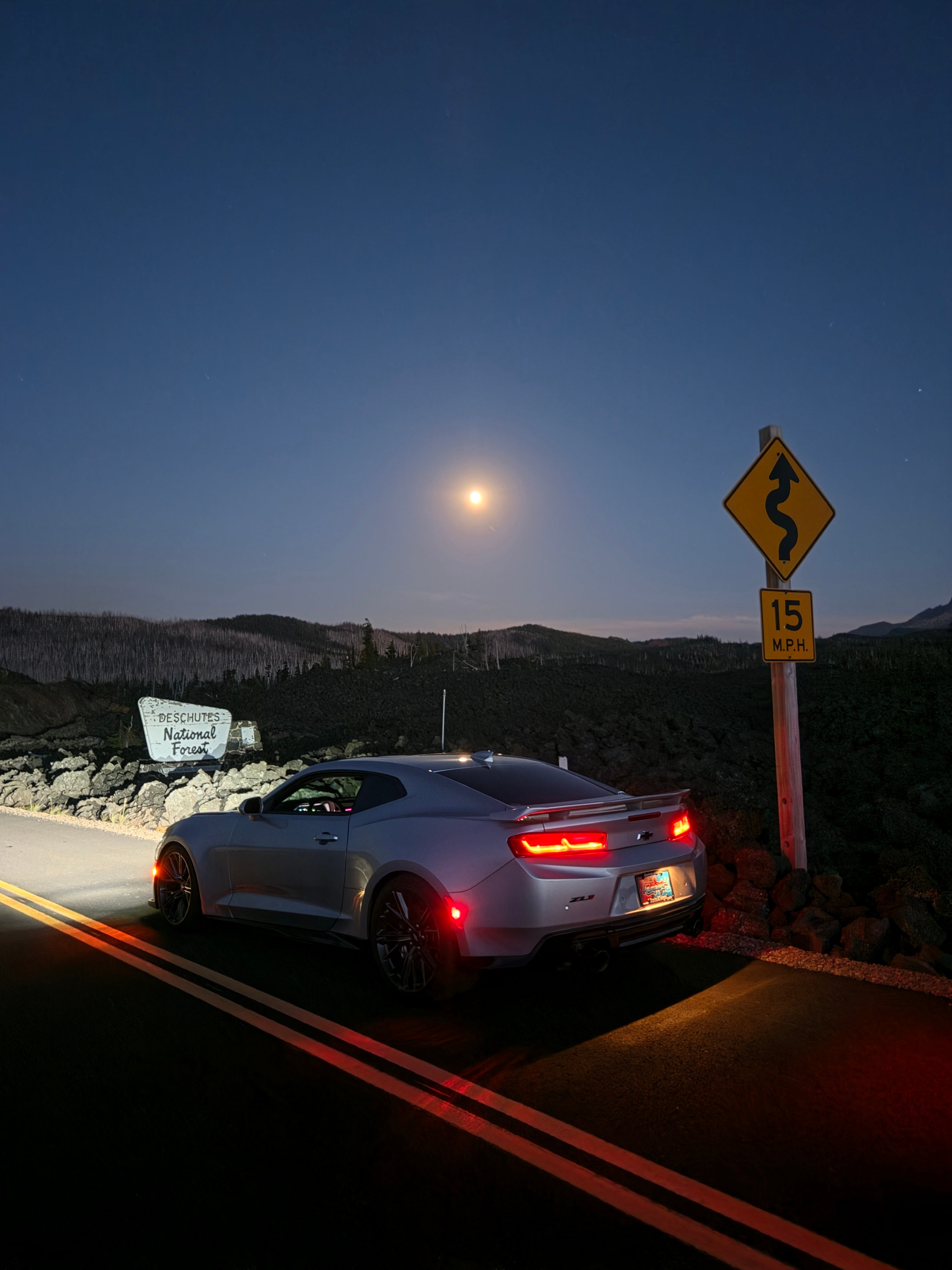
Camaro ZL1 Dee Wright Observatory

Taming the Lava Fields: Why McKenzie Pass (OR-242) Is Central Oregon’s Ultimate Driver’s Road

Taming the Lava Fields: Why McKenzie Pass (OR-242) Is Central Oregon’s Ultimate Driver’s Road Living in Central Oregon means some of the most dramatic driving terrain in the country sits right outside our doors. You do not need to cross five state lines to find world-class asphalt; McKenzie Pass Highway (OR-242) is right in our backyard. Beginning just west of Sisters, Highway 242 climbs out of fragrant ponderosa pine stands, snakes through relentless hairpin switchbacks, and breaks above the tree line into a 65-square-mile sea of jagged volcanic basalt. We took our silver 2017 Chevrolet Camaro ZL1 up to the summit at dusk to run the pass under the moonlight. The route proved why this stretch of pavement remains an essential bucket-list drive for true driving enthusiasts. The Pedigree of the 2017 Camaro ZL1: A Track Weapon on Mountain Asphalt When Chevrolet introduced the sixth-generation Camaro ZL1 in 2017, the model evolved beyond straight-line muscle into a legitimate world-class sports car. Developed on GM’s lightweight Alpha platform, the sixth-gen ZL1 was engineered specifically to set blistering lap times on the world's most demanding circuits, including a documented 7:16.04 lap at Germany’s notorious Nürburgring Nordschleife. Under the carbon-fiber heat extractor on the hood sits a supercharged 6.2L LT4 small-block V8, factory rated at 650 horsepower and 650 lb-ft of torque. Instant Forced Induction: The 1.7-liter Eaton supercharger delivers immediate low-end torque without turbo lag, pulling hard out of slow second-gear corners and climbing steep alpine grades effortlessly. Magnetic Ride Control: Magnetorheological dampers read the pavement every millisecond, adjusting shock stiffness instantly to keep the tires planted over uneven mountain frost heaves and camber changes. Precision Braking & Aero: Massive 6-piston front Brembo calipers gripping 15.35-inch two-piece rotors provide fade-free deceleration going into tight turns, while functional aero components—including the aggressive front splitter, "flowtie" grille emblem, and rear spoiler—maintain high-speed downforce and powertrain cooling. On a road like OR-242, the ZL1 feels balanced, planted, and precise rather than unwieldy. OR-242: A Short-Lived Season on an Unforgiving Mountain Unlike standard mountain highways, Highway 242 is untouched by modern winter maintenance. The road is unplowed, unsalted, and unpainted for long stretches, preserving its raw character. The Snow Window: Winter snowpacks reaching up to 14 feet shut the highway down behind snow gates from roughly November through late June or early July. This leaves only a narrow late-summer window for automotive enthusiasts to experience the route. Historic Evolution: Long before asphalt was laid, this corridor was an ancient trade route used by Indigenous peoples. In 1862, pioneer Felix Scott Jr. cleared a rough trail across the basalt to move supply wagons and cattle to the Idaho mines. By 1872, the route operated as a privately held wagon toll road before being incorporated into the state highway system in the 1920s. In 1962, when commercial traffic shifted permanently to modern Highway 126, OR-242 was preserved as a dedicated Scenic Byway. The Dee Wright Observatory: An Otherworldly High Desert Stronghold At the 5,325-foot summit sits the Dee Wright Observatory, a striking stone stronghold that looks like an ancient fortress rising from the lava rock. Built by the CCC (1935): Constructed during the Great Depression by the Civilian Conservation Corps (Company 1927), the structure was built entirely from surrounding native basalt. It was named in honor of Dee Wright, the project’s veteran Forest Service foreman who passed away in 1934 before construction finished. Framed Viewing Portals: Inside the shelter, builders cut precise viewing slits into the stone walls, each angled to frame a specific Cascade peak. The 1937 Bronze Compass: Ascending the exterior stairs leads to an open rooftop observation deck anchored by a bronze azimuth/peakfinder disk. Cast in 1937 by students at Portland’s Benson Polytechnic School, the brass instrument pinpoints the bearings and elevations of the surrounding horizon—including North and Middle Sister, Mount Washington, Belknap Crater, and Mount Jefferson. Moonscape History: The surrounding black volcanic field—formed by basalt flows from Little Belknap Crater and Yapoah Cone thousands of years ago—is so stark and barren that NASA used the site in 1964 to train Apollo astronauts for lunar surface missions. Find the Right Machine for the Open Road Highway 242 reminds drivers that the journey matters just as much as the destination. Central Oregon offers exceptional driving landscapes, but enjoying them to the fullest requires the right machine under your control. Whether you want a supercharged performance coupe to carve mountain apexes, a high-clearance 4x4 to explore remote forest roads, or an efficient daily driver, the Pacific Northwest was built to be explored. Visit Auto Kings in Central Oregon to view our hand-picked inventory and find the platform for your next mountain run.